

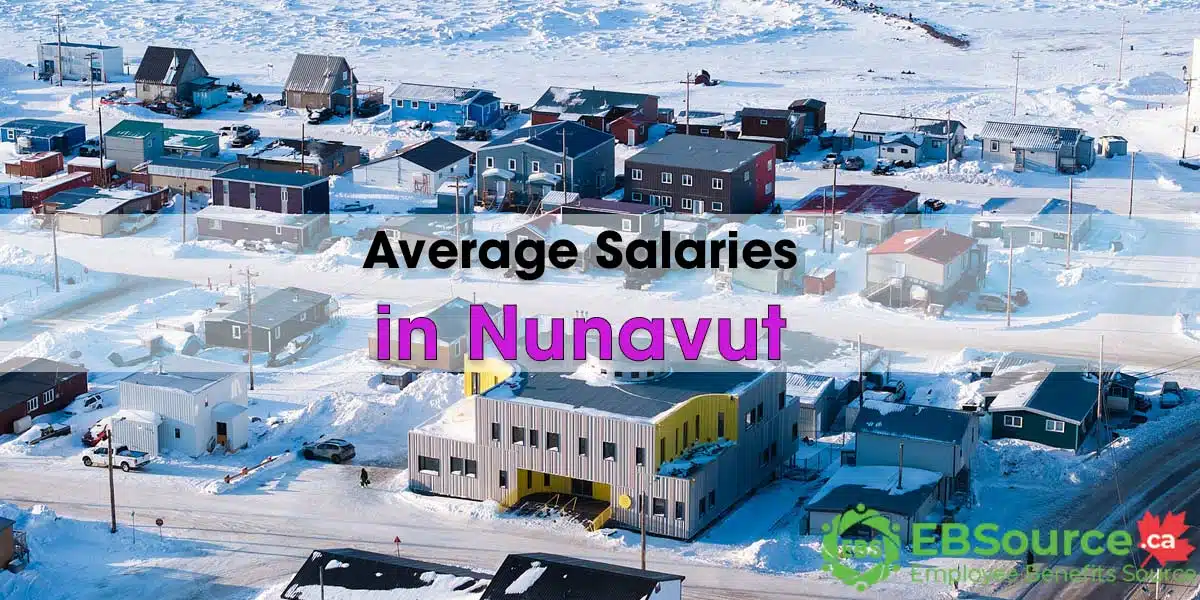
Nunavut is Canada’s largest and newest territory, covering over 1.9 million square kilometres in the Canadian Arctic. With a population of only 41,919 as of October 2025, Nunavut has a tight-knit yet robust job market centred on industries such as mining, oil and gas, fishing and hunting, construction, government services, transportation, tourism, and more.
For job seekers considering opportunities, a key factor is the earning potential and average salaries in Nunavut across different occupations and regions. This guide will comprehensively examine typical wages and incomes in Nunavut.
What are the Average Weekly Earnings in Nunavut?
According to Statistics Canada’s Survey of Employment, Payrolls and Hours (SEPH), the average weekly earnings (including overtime) in Nunavut were $1,774.16 as of October 2025, higher than the national average weekly wage of $1,312.16. This places Nunavut 1st out of 13 provinces and territories in Canada in terms of average wages.
These figures represent 0.8% year-over-year growth. However, salaries can vary significantly by profession, skill level, experience, education, and location within the territory.
Which Occupations Have the Highest Wages in Nunavut?

Nunavut has the highest salaries in Canada because the public sector is the main employer, accounting for over half of all jobs in areas such as government, healthcare, and education. These jobs offer competitive pay to attract skilled workers.
Additionally, salaries include a Northern Allowance to help with the high cost of living. A new agreement for government employees, ratified in December 2025, includes a 3% wage increase for October 2026 and a 2.5% increase for October 2027. Distinctly, the Northern Allowance will increase by 2% on January 1, 2026 and 3% on January 1, 2027.
Here are some of the top-paying occupations in Nunavut based on median wages:
| Occupation (NOC) | Median Wage | Wage Range |
| Judges (41100) | $414,900/year | $414,900 – $455,000/year |
| Senior government managers and officials (00011) | $88.91/hour | $70.59 – $148.21/hour |
| Government managers – economic analysis, policy development and program administration (40011) | $77.18/hour | $58.24 – $93.86/hour |
| Financial managers (10010) | $76.00/hour | $56.42 – $103.42/hour |
| School principals and administrators of elementary and secondary education (40021) | $72.95/hour | $50.82 – $88.26/hour |
| Lawyers and Quebec notaries (41101) | $68.33/hour | $45.64 – $89.04/hour |
| Government managers – health and social policy development and program administration (40010) | $67.83/hour | $51.54 – $89.52/hour |
| Social workers (41300) | $64.57/hour | $44.64 – $78.28/hour |
| Secondary school teachers (41220) | $59.77/hour | $32.00 – $71.12/hour |
| Registered nurses and registered psychiatric nurses (31301) | $57.99/hour | $45.00 – $71.57/hour |
Source: Government of Canada, Job Bank, Wages in Nunavut
The wage structure highlights the urgent need for skilled workers in the region, with the public sector, especially jobs in government, justice, and education, offering the most opportunities. Base wages in these fields include a Northern Allowance to help with the high cost of living, which was increased in a new collective agreement in late 2025. Specialized trades and resource extraction jobs also pay well, with Construction Managers (70010) earning a median wage of $64.17 per hour.
Overall, the data clearly shows that the highest-paying jobs require extensive education and training and specialized skills in high demand.
What is the Job Outlook in Nunavut?
Beyond the highest-paying roles, it is also important to consider which occupations have the strongest employment prospects. According to the Government of Canada’s Job Bank, many jobs in Nunavut have a “Good” or “Very Good” outlook, meaning there’s a strong chance of finding work in these areas. This demand is mainly from the public sector, skilled trades, and essential services needed for the communities.
Below is a table showing jobs with strong prospects in Nunavut and their pay ranges, giving a clear idea of potential earnings for these in-demand roles.
| Occupation (NOC) | Job Outlook | Pay Range |
| Property administrators (13101) | Very Good | $36.98 – $66.80/hour |
| Registered nurses and registered psychiatric nurses (31301) | Very Good | $45.00 – $71.57/hour |
| Licensed practical nurses (32101) | Very Good | Not Available |
| Secondary school teachers (41220) | Very Good | $32.00 – $71.12/hour |
| Elementary school and kindergarten teachers (41221) | Very Good | $30.00 – $63.08/hour |
| Procurement and purchasing agents and officers (12102) | Good | $36.51 – $64.90/hour |
| Accounting technicians and bookkeepers (12200) | Good | $25.86 – $50.30/hour |
| Payroll administrators (13102) | Good | $31.56 – $62.44/hour |
| Accounting and related clerks (14200) | Good | $19.25 – $56.00/hour |
| Storekeepers and partspersons (14401) | Good | Not Available |
| Civil engineers (21300) | Good | Not Available |
| Managers in social, community and correctional services (40030) | Good | $46.15 – $91.28/hour |
| College and other vocational instructors (41210) | Good | $32.00 – $60.00/hour |
| Education policy researchers, consultants and program officers (41405) | Good | $36.89 – $76.71/hour |
| Retail and wholesale trade managers (60020) | Good | $27.79 – $68.53/hour |
| Retail salespersons and visual merchandisers (64100) | Good | $19.00 – $38.46/hour |
| Facility operation and maintenance managers (70012) | Good | $40.99 – $85.75/hour |
| Electricians (except industrial and power system) (72200) | Good | $21.45 – $47.70/hour |
| Plumbers (72300) | Good | $25.28 – $53.12/hour |
| Carpenters (72310) | Good | $20.46 – $51.99/hour |
| Heavy-duty equipment mechanics (72401) | Good | $36.00 – $55.00/hour |
| Automotive service technicians, truck and bus mechanics and mechanical repairers (72410) | Good | $21.69 – $51.87/hour |
| General building maintenance workers and building superintendents (73201) | Good | $19.20 – $50.83/hour |
| Heavy equipment operators (73400) | Good | $21.87 – $51.49/hour |
| Construction trades helpers and labourers (75110) | Good | $22.00 – $42.00/hour |
Source: Government of Canada, Job Bank, Job Outlooks in Nunavut
In Nunavut, there is a high demand for occupations in healthcare, education, administration, and skilled trades. The salary figures mentioned do not include the Northern Allowance, which can significantly increase earnings to help with the higher cost of living.
Even with federal funding for some sectors, Nunavut struggles to hire and keep essential workers, leading to competitive salaries and incentives to attract talent. These jobs are important for the well-being of the communities and their economic growth.
Overall, these in-demand careers offer strong earning potential and a good chance of employment for qualified candidates.
Final Thoughts to Consider when Living and Working in Nunavut
High salaries are appealing, but they are just one aspect of working in Nunavut. Those looking for jobs there should also think about the economic, cultural, and practical aspects of life in Canada’s Arctic.
What is the Economic Outlook in Nunavut?
As of November 2025, Nunavut had 14,900 employed individuals, a 0.7% decline from the previous year. The unemployment rate stood at 12.7%. The employment rate is now 55.0%, down by 1.3 points year-over-year, while the participation rate is 63%, up by 3% points from last year.
Though Nunavut’s economy relies heavily on the public sector, it also has a strong resource extraction industry. Major mining operations are important private-sector employers, offering high-paying jobs in areas like operations, trades, logistics, and environmental science. While these jobs come with good salaries, they can be affected by changes in global commodity prices, unlike the more stable government jobs.
What is the Socio-Cultural and Work Environment in Nunavut?
The job market in Nunavut is deeply connected to its population, approximately 85% of whom are Inuit. So, Government policies focus on promoting Inuit employment, and the Nunavut Agreement ensures that hiring reflects this demographic.
This creates special job opportunities, especially for those who understand Inuit culture and language (Inuktut). Recently, the government also added bonuses for speaking Inuktut, emphasizing its importance in the workplace.
What is the Community and Lifestyle in Nunavut?
Beyond salary, living and working in Nunavut also offers a unique experience with close-knit communities, beautiful natural surroundings, and a rich cultural setting. Yet, professionals should be prepared for challenges such as harsh weather, limited amenities, and expensive travel to southern Canada. These issues can lead to high turnover, but those who remain often find fulfilling long-term careers.
What is the Cost of Living in Nunavut?
The cost of market rent in Nunavut is extremely high. Many professional roles, particularly in government and healthcare, offer subsidized housing as a benefit. This assistance can significantly increase your disposable income. Be sure to clarify whether housing is included in your job offer and what your contribution will be.
The expenses for goods and services are not consistent across the territory. Groceries, travel, and utilities in a remote hamlet can be much more expensive compared to Iqaluit, the capital. It’s important to research the specific costs associated with your future community before accepting a position.
What is the minimum wage in Nunavut?
Nunavut’s minimum wage is $19.75 per hour starting September 1, 2025, yet it struggles to keep pace with a food basket in the territory. The adjustment will occur on September 1, based on changes in the CPI for Iqaluit and the average hourly wage in Nunavut.
This will ensure that wages keep up with inflation and labour market trends. The rate will be announced by the Government of Nunavut by July 31 each year and published in the Nunavut Gazette.
Average Salaries in Canada vary widely between provinces and territories due to factors like cost of living, labour supply, and economic strength. To help you understand pay scales across Canada, we’ve compiled this series on average salaries by region:
- Average Salaries in Ontario
- Average Salaries in British Columbia
- Average Salaries in Quebec
- Average Salaries in Alberta
- Average Salaries in Northwest Territories
- Average Salaries in Yukon
- Average Salaries in Newfoundland and Labrador
- Average Salaries in Nova Scotia
Key Takeaways on Average Salaries in Nunavut

There are 3 key points to understand about salaries, wages, and the job market across Canada’s massive arctic territory, including:
- Average weekly earnings (including overtime) in Nunavut were $1,774.16 in October 2025 (+0.8% year‑over‑year), the highest among provinces and territories.
- Top salaries are found in Judges, Senior government managers and officials, and Financial managers.
- In-demand roles such as healthcare, education, and skilled trades frequently pay above-average wages.
To sum up, average salaries in Nunavut are the highest in Canada, but so is the cost of living. Due to its remote location and reliance on air shipping, everyday items are much more expensive. High salaries and the Northern Allowance help offset these costs and attract skilled workers. So, workers should explore all the benefits available when choosing a job in this territory.
Disclaimer: The salary data in this article was last updated in January 2026 and is for informational purposes only. The job market changes frequently, so for the latest information, check official sources like Statistics Canada and the Government of Canada's Job Bank.
FAQs related to the Average Salary in Nunavut
Do remote location incentives apply to all jobs?
No. Northern Allowance amounts and eligibility vary by employer and program. For example, the Government of Nunavut's Early Learning and Child Care (ELCC) Wage Scale provides a Northern Allowance for eligible staff, ranging from $7.70 to $14.63 per hour, depending on the community and weekly hours.
Other Government positions also have different Northern Allowance amounts based on the community. Private-sector jobs may offer similar allowances, so it's best to check the job posting or collective agreement for details.
How long do professionals tend to stay in Nunavut?
There isn't one standard measure for how long people stay in jobs across different areas. It depends on the sector and community, and is affected by things like housing availability and work schedules. Job seekers should check department-specific details, such as pay, benefits, and incentives, on the Government of Nunavut website and in current job listings.
Do salaries increase with higher education?
Yes. In 2024, workers aged 25 and older with a bachelor's degree or higher earned an average of $44.67 per hour. Those with education below a bachelor's degree made about $34.38 per hour, while individuals with a high school diploma or less earned around $28.82 per hour. Education, along with occupation, industry, and experience, affects pay.
